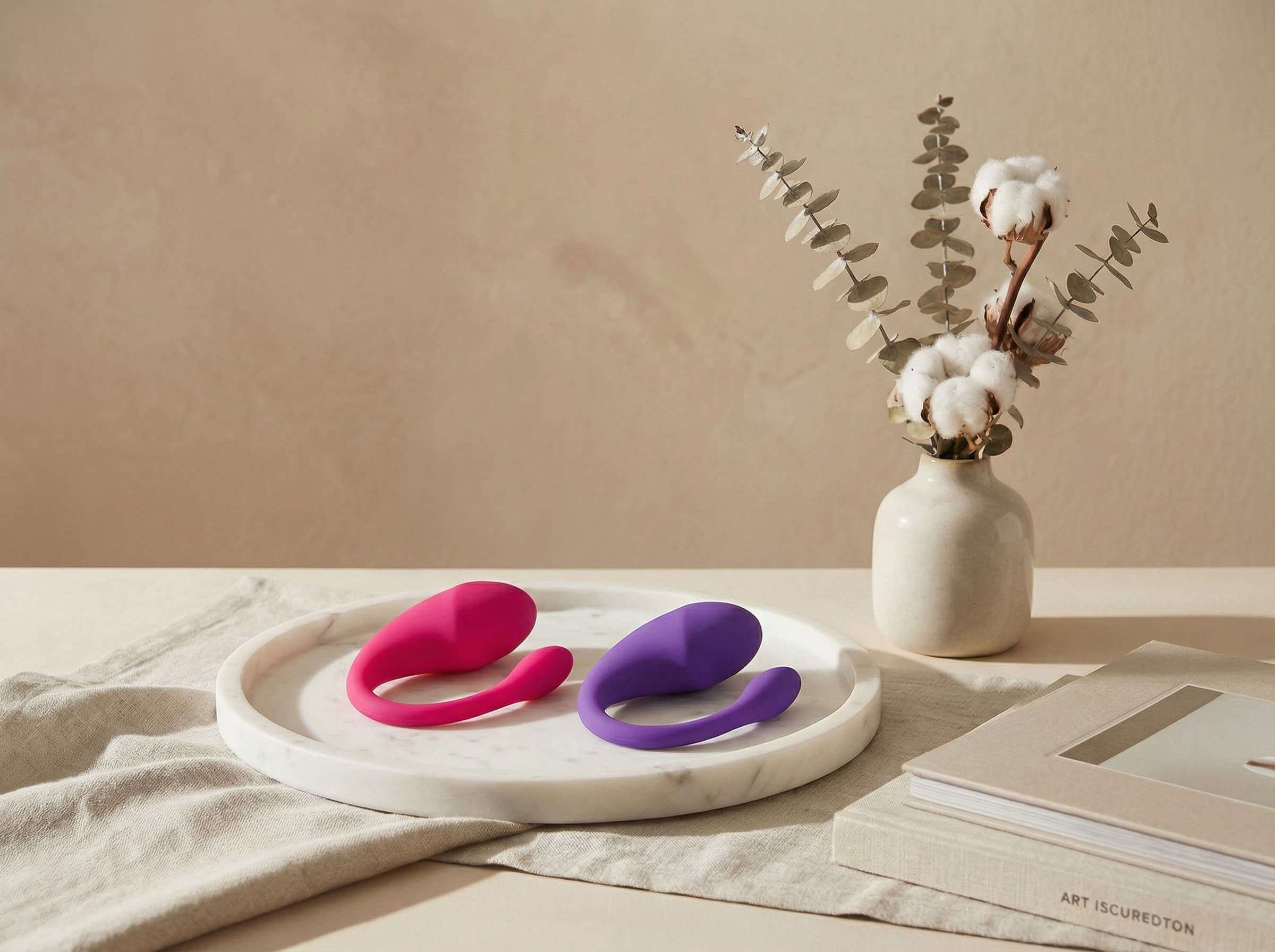
Are You Leaving Half the Market Behind? Why a Gender-Balanced Sex Toy Product Line Matters
In the sexual wellness industry, product selection is more than a matter of variety. It is a direct reflection of who your brand believes its customers are.
For many retailers, wholesalers, and online sellers, the product catalog still leans heavily toward male-oriented products. Male masturbators, strokers, and traditional accessories may occupy a large part of the shelf, while female-focused products receive far less attention.
But here is the problem:
If your product line is heavily gender-imbalanced, you may be leaving a significant part of the market untapped.
Women are not a niche audience in sexual wellness. They are a major consumer group with increasingly diverse needs, purchasing motivations, and expectations.
So the real question for retailers and distributors is no longer:
“Should we sell more female products?”
It is:
“Can we afford not to?”
Women Are No Longer a Secondary Market
The sexual wellness industry has been moving away from its traditional male-centered image.
Market research continues to identify women as one of the largest consumer groups in sexual wellness. For example, Mordor Intelligence estimates that women represented 54.74% of the sexual wellness market by end user in 2025.
Other market research also points to women holding a leading position in the category, while female-focused sexual wellness continues to expand across different product types and price segments.
This shift reflects a broader change in consumer behavior.
Female consumers are increasingly approaching intimate products through the lens of:
- Self-care
- Personal wellness
- Stress relief
- Intimacy
- Body awareness
- Relationship quality
- Personalized pleasure
- Sexual confidence
That means female products should not simply be treated as another product category.
They can become an important pillar of your entire product strategy.
The Problem With a Male-Heavy Product Catalog
Imagine an online store with 100 products.
If 70–80 of them are designed primarily for male consumers, what message does that send?
Even if you technically sell female products, customers may still perceive your brand as “male-focused.”
This creates several potential problems.
1. You Limit Your Customer Base
A narrow product assortment naturally limits the audiences you can attract.
A retailer focusing mainly on male products may miss female consumers who are actively searching for:
- Clitoral stimulators
- G-spot vibrators
- Bullet vibrators
- Wearable vibrators
- Couples' products
- Suction stimulators
- Remote-controlled toys
- Heating products
- Beginner-friendly products
The issue isn't necessarily a lack of demand.
Sometimes, the problem is simply that the right products are not visible.
2. You Lose Cross-Selling Opportunities
A balanced catalog creates more opportunities to build product combinations.
For example:
Female vibrator + lubricant + storage pouch
or
Couples' toy + wearable vibrator + intimate wellness accessories
A customer who enters your store looking for one product can potentially discover several complementary products.
This can increase average order value while creating a more complete shopping experience.
3. You Miss Repeat-Purchase Potential
Female sexual wellness is becoming increasingly connected with broader wellness and lifestyle conversations.
Industry discussions in 2026 have highlighted growing interest in products supporting different life stages and needs, including menopause-related sexual wellness and intimate comfort.
This creates opportunities for brands to build product ecosystems, rather than relying on one-off purchases.
Instead of selling one vibrator, for example, a brand can gradually develop a portfolio around different experiences, price points, functions, and customer needs.
Female Products Are Becoming More Diverse
Another important change is that the female product market is no longer dominated by one or two traditional product types.
Today's assortment can cover multiple consumer preferences.
Clitoral Stimulation
Products focused on external stimulation remain an important category for female consumers.
Different shapes, intensities, suction technologies, and stimulation patterns allow brands to target different preferences.
G-Spot & Internal Vibrators
Curved designs and ergonomic structures can be positioned around targeted stimulation and body-friendly design.
For retailers, this category also offers opportunities to create different price tiers—from entry-level products to premium rechargeable models.
Wearable Products
Wearable products can appeal to consumers looking for hands-free experiences, discretion, or couples-oriented use.
They also offer interesting opportunities for connected-device innovation and app-based experiences.
Dual-Stimulation Products
Products combining multiple stimulation functions can create strong differentiation.
Instead of competing purely on price, brands can compete through:
- Multi-function designs
- Ergonomic shapes
- Quiet motors
- Heating functions
- Multiple intensity levels
- Rechargeable batteries
- Waterproof construction
- Smart controls
Beginner-Friendly Products
Not every customer wants a powerful, complicated device.
First-time buyers may prefer products that are:
- Small
- Simple
- Quiet
- Easy to clean
- Easy to charge
- Intuitive to operate
- Discreet in appearance
This segment can be especially valuable for brands trying to reduce the psychological barrier around purchasing intimate products.
Don't Just Add Female Products—Build a Female Product Strategy
Adding three female products to a catalog of 100 male products is not necessarily a strategy.
A stronger approach is to build a balanced product matrix.
Consider organizing your female assortment into several levels.
Entry Level
Focus on accessible price points and simple functions.
Examples include:
- Mini vibrators
- Bullet vibrators
- Compact rechargeable devices
- Simple massage products
The goal is to attract first-time customers.
Mid-Range
Introduce more functions and better materials.
Examples:
- Multi-mode vibrators
- G-spot vibrators
- Dual-motor products
- Waterproof rechargeable devices
- Heating products
This segment can become the core of your everyday sales.
Premium
Focus on product design, advanced technology, materials, and user experience.
Examples include:
- Smart-connected devices
- App-controlled products
- Premium silicone products
- Advanced multi-function devices
- Luxury-designed intimate wellness products
This tier helps brands move beyond price competition.
Product Design Matters More Than Ever
The modern female consumer does not necessarily want a product that looks like a traditional adult toy.
Design is increasingly part of the purchasing decision.
The rise of non-anatomical and lifestyle-oriented designs illustrates this shift. In 2026, fruit-inspired vibrator designs have even emerged as a noticeable trend, partly because playful, non-anatomical aesthetics can make products feel more approachable and easier to discuss or market.
For brands, this means product development should consider more than functionality.
Think about:
Shape + Material + Color + Packaging + User Experience + Brand Positioning
A product that looks like a modern wellness device may appeal to consumers who would never consider buying something that looks overtly sexual.
From “Sex Toy” to “Sexual Wellness Product”
This may be one of the biggest opportunities for brands.
Consumers are increasingly connecting intimacy with overall wellbeing.
A 2026 research study published in Frontiers in Public Health found that more than half of surveyed female university students reported using sex toys during masturbation, while nearly 30% reported using them with a partner. The researchers also discussed sex toys in the context of sexual functioning, intimacy, and wellbeing.
This doesn't mean every product should be marketed with medical claims.
Quite the opposite.
Brands should avoid unsupported health claims and instead focus on responsible positioning around:
- Personal pleasure
- Intimacy
- Self-care
- Relaxation
- Exploration
- Body confidence
- Relationship experiences
This creates a more modern and approachable brand identity.
A Balanced Catalog Can Also Improve Your Brand Positioning
Product assortment communicates brand identity.
A store with a wide range of male and female products can position itself as a complete sexual wellness destination rather than a seller of individual adult products.
This opens the door to broader content marketing.
For example:
Blog topics
- How to Choose Your First Vibrator
- Beginner's Guide to Female Sexual Wellness
- How Couples Can Explore Intimacy Together
- How to Choose the Right Vibrator for Different Preferences
- Sexual Wellness During Different Life Stages
Product content
Instead of simply saying:
“10 vibration modes.”
You can explain:
“Designed for users who want to explore different stimulation intensities and find a personalized experience.”
The second approach sells an experience—not just a specification.
Don't Forget Different Life Stages
Another major opportunity is segmentation by life stage.
The female sexual wellness market is increasingly moving beyond a one-size-fits-all approach.
Brands can consider products and educational content for:
- First-time users
- Young adults
- Couples
- Long-distance couples
- Busy professionals
- Mature consumers
- Menopause-related wellness needs
The growing conversation around menopause is particularly interesting. Industry professionals reported increasing consumer demand for products that address comfort, arousal, sensation, and intimacy during menopause.
For manufacturers and retailers, this means product development can become much more targeted.
Instead of asking:
“What female toy should we launch?”
Ask:
“Which female consumer problem or lifestyle scenario are we designing for?”
That question usually leads to better products.
What Should Retailers Add to Their Product Line?
If your current catalog is heavily male-oriented, you don't need to completely rebuild it overnight.
Start with a structured expansion.
A practical starting portfolio could include:
| Category | Purpose |
|---|---|
| Mini Vibrators | Entry-level customers |
| Bullet Vibrators | Affordable everyday products |
| G-Spot Vibrators | Targeted stimulation |
| Suction Stimulators | New stimulation experience |
| Wearable Vibrators | Couples & hands-free use |
| Dual-Motor Products | Premium functionality |
| Heating Products | Differentiation |
| App-Controlled Toys | Technology-focused customers |
| Couples' Products | Expand shared-use scenarios |
| Intimate Accessories | Cross-selling opportunities |
The goal is not simply to increase SKU numbers.
The goal is to create coverage across different consumers, price levels, functions, and purchasing motivations.
For B2B Buyers: Think Portfolio, Not Individual Products
For wholesalers, distributors, Amazon sellers, and private-label brands, this mindset is especially important.
Instead of asking a manufacturer:
“What is your best-selling female vibrator?”
Ask:
“Can you help me build a complete female-focused product line?”
A reliable OEM/ODM partner should ideally be able to support:
- Product development
- Custom colors
- Custom materials
- Private labeling
- Custom packaging
- Product photography support
- Multiple price tiers
- Low-MOQ options
- Functional customization
- Prototype development
This gives retailers greater flexibility when testing new categories.
Your Shelf Should Reflect Your Market
The biggest mistake is assuming that a product catalog should simply reflect what has sold historically.
Historical sales are important—but they can also reinforce old habits.
If you only stock products that have always sold, you may never discover new customer segments.
A better approach is to regularly review:
Who buys from us?
Who doesn't?
Which customer groups are underrepresented?
Which product categories are missing?
What products could encourage cross-selling?
Which price points are missing?
This turns product selection from guesswork into portfolio management.
The Future Is Not “Male vs. Female”
Ultimately, the goal isn't to create a rigid 50/50 split between male and female products.
That's too simplistic.
A truly modern sexual wellness portfolio should be consumer-centered rather than gender-centered.
Some products will be designed primarily for women.
Others will target men.
Others will be designed for couples.
Others may appeal to a broader range of consumers regardless of gender.
The real opportunity is to understand different needs and create products around those needs.
Final Thoughts: Don't Leave Half the Opportunity on the Shelf
The sexual wellness industry is changing.
Consumers are becoming more open to intimate products, while brands are moving toward wellness, personalization, better design, technology, and more inclusive product portfolios.
For retailers and B2B buyers, this creates a simple but important lesson:
A product line that ignores female consumers may also be ignoring a major growth opportunity.
You don't need hundreds of female SKUs.
You need the right mix of products—from beginner-friendly devices to premium innovations, from solo products to couples' products, and from affordable entry points to differentiated high-value products.
Because in today's sexual wellness market, the question isn't whether women belong on your shelf.
It's whether your shelf gives them enough reasons to stay.
Should You Stay Friends With Your Ex?
Why Do We Miss People Who Hurt Us?
Related Article